



 Takeaways
Nothing is sacred to scammers. They will invade every private space and use every tactic they can think of to get an upper hand over their target, even if it means creating fake jobs, fake companies, and fake gambling platforms. They will spend millions of dollars to build prison compounds, kidnap people to staff them, and have them create marketing campaigns to promote their scam to the world. When you start connecting the dots, you inevitably start wondering: What is the Sihanoukville pig butchering crypto scam? It’s a scam that deceives people from around the world with high-paying fake job offers, promising paid flights and visas, only to kidnap them upon arrival in Sihanoukville. The victims are held captive in a compound controlled by organized crime groups and are eventually forced to scam others through various methods, such as romance and investment schemes.
Pig Butchering Scams Are Everywhere
When I finish writing an article, I usually unwind by cracking open a cold drink before watching some sports, especially English football. My favorite team is Sunderland because of how they use their scrappy tactics to eke out goals and points. I never thought much about the logistics behind making a successful English Premier League (EPL) team, such as securing sponsors and placing their logos on jerseys, which is why I was thoroughly shocked when I discovered that’s how the Sihanoukville pig butchering crypto scam invaded my most sacred moment of relaxation. It turns out that the scam has ties to English top-tier football, and there are indications that the governing bodies of the EPL are aware of it, but they are trying to quietly deal with it and avoid a scandal without anyone realizing.

One report hints at a fake gambling company sponsoring Aston Villa
In October 2024, the United Nations issued a report on organized crime in Asia that described how a shady gambling company registered in Sihanoukville managed to secure a sponsorship deal with an EPL team. The image above was low quality and blurry, but we upscaled and cleaned it up using AI to reveal Aston Villa’s logo and team colors and that the company’s name has 2-3 characters. Official sponsorship records show that in June 2023 Aston Villa partnered with a gambling platform called “BK8” and had its logos on team jerseys. Visiting the BK8 website shows the same layout and confirms that’s the company mentioned in the report.

January 2026 landing page of BK8.co
The sponsorship deal abruptly ended, and I couldn’t find any plausible explanation for it other than that the Aston Villa fans were upset with the deal. What I could find was a pledge by the EPL to ban all gambling logos from appearing on the front of any team’s jersey by the end of 2026, though they can still appear on sleeves. So, why did Asian scammers decide to fund an EPL team? To find that out, we have to dive deep into the question of what is Sihanoukville pig butchering crypto scam.
The Origin of the Sihanoukville Pig Butchering Crypto Scam
A pig butchering scam was originally done by one Chinese to another and exclusively in China. The scammer contacted a random person, established a relationship of trust, and mentioned an investment opportunity. The victim, driven by greed, tried it out, became amazed with the returns that were actually fake, and gradually sank more and more money into it until the scammer cut all contact and kept the money. Another version of the scam relied on sparking romance and evoking sympathy in the victim before asking for more and more money. The scammer would ultimately propose to meet up, and he asked the victim to pay for travel expenses. Once the scammer got the money, he would cut contact for good. Obviously, the way to avoid the scam would be to think for a bit before sending money to anyone and at least ensure there is a paper trail that leads to the recipient of money so that the police can find him.
The Chinese government eventually started cracking down on the pig butchering scammers, who moved out of China into neighboring countries, such as Myanmar and Cambodia, where they took over the hotel and casino infrastructure that was abandoned because of the Covid-19 pandemic. Those hotels and casinos originally served Chinese tourists and gamblers, and I found some Google Maps reviews that indicate some scammers tried to run a hybrid operation, with a legitimate casino or hotel business in the front and the pig butchering scam center in the back. As the crackdown continued and the regional instability increased, the scammers had to move farther and farther south and focus on making their scam resistant to interruptions and as lucrative as possible, which meant taking it global. The scammers eventually arrived in the Cambodian coastal city called Sihanoukville, where they found political support, and took over the casino infrastructure built by the Chinese real estate investors as early as 2017.

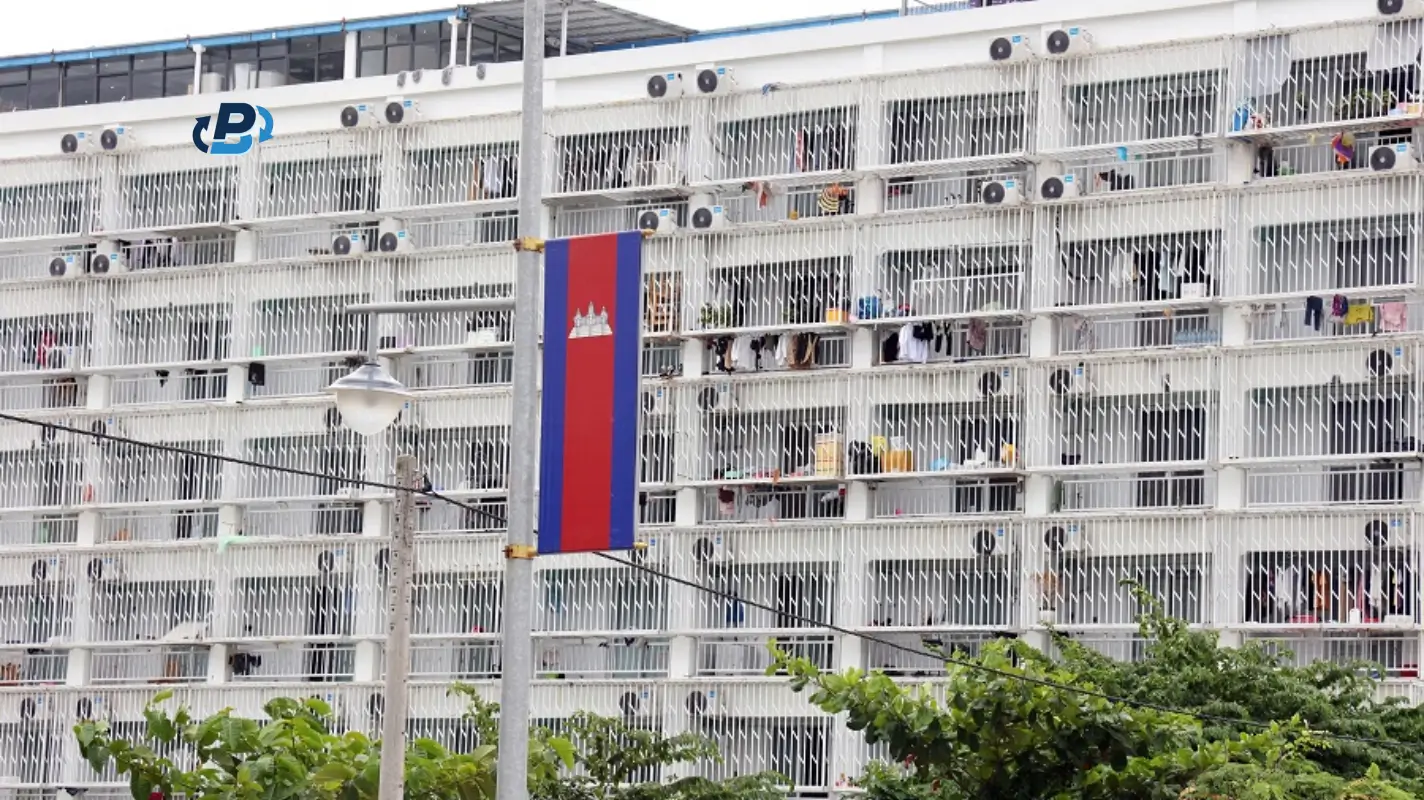
Sihanoukville had over 1,100 unfinished casino and hotel buildings in 2019
The criminal groups running the Sihanoukville compounds are in all likelihood the Chinese Triad mafia and are closely tied to the Cambodian ruling elites, in particular the former prime minister Hun Sen and his successor, his son. Each year, there are 12.5 billion new reasons for the Cambodian business and political elites to support and protect the pig butchering scammers from the Chinese government. The Triad created a network of investment companies, poured money into real estate, and started building its own infrastructure from scratch while the Cambodian elites sabotaged all efforts by the Chinese government to stop the scammers, though the story is not black and white. The Chinese government appears to cooperate with or at least ignore some scammers in order to justify its presence and involvement in the region, and it seems to me that some of the scammers are being used to wage a proxy cyber war against other countries, especially the US.
Some of the stolen money flows to other countries in the region, especially Myanmar, where it funds rebel groups that continue armed conflicts and maintain instability, and some flows to industries and businesses around the world in an attempt to generate a steady income and launder the dirty money, which explains BK8 sponsoring Aston Villa. There are indications that the scammers travel abroad and present themselves as a part of the official Chinese Belt and Road initiative to infiltrate and corrupt foreign governments, and it’s possible that some of them have the unofficial support of the Chinese government. When they create a foothold in a country and start destabilizing it, the Chinese government approaches the country’s leadership and offers to send its police and troops under the Global Security Initiative, which is what happened in Sihanoukville as well in 2019.
The Evolution of the Sihanoukville Pig Butchering Crypto Scam
The pig butchering scam evolved quite a bit in just a few years. What was a relatively simple scam that needed only a smartphone and a messaging app has become a layered scam that involves mass downloading of content from social media, identity theft, AI deepfakes, fake gambling and investment platforms, money laundering through multiple blockchains, real estate enterprises, and battalions of people working in tandem to keep the scam going.
The scammers have marketing departments that make fake job postings to lure victims who will be kidnapped to work in their prison compounds, creating fake Tinder and other profiles to scam lonely people, and they also employ IT experts who build fake websites for their fake businesses. The scammers have also started spreading to other countries and building business connections with other organized crime groups to make themselves more resilient to government crackdowns.

Unnatural beauty without any blemishes hints that the selfie is a fake photo
One problem the scammers faced in expanding was the language barrier. The Chinese struggle with English because their school system uses the “chabuduo” method to teach it, so they couldn’t target foreigners unless they had employees who are good at English to maintain contact with victims. That’s why they needed foreigners, and lots of them, with one United Nations report stating that there are 300,000 people from over 40 countries involved in running pig butchering scams out of the Mekong region, most of them victims of human trafficking done through LinkedIn, Facebook, and Jobs.com.
Another problem was moving the money. Telegram turned out to be the most useful app for scammers and money mules to meet each other and arrange the transfer of money and crypto, in particular through a Telegram group owned by Fully Light Company, a Myanmar criminal enterprise tied to the Kokang Border Guard Force that was defeated in January 2024. The group remained active and now has over 100,000 members that create over 800,000 posts a month. Two common methods they use to move money are fake e-commerce and fake money exchange businesses, and Tether is the most common cryptocurrency choice.
What Are the Methods Used by Sihanoukville Scam Centers To Steal Cryptocurrency? Asking the Victim To Do All the Work
Zeke Faux mentions in his book that the majority of money transfers for a Sihanoukville pig butchering scam happens in Tether. It is a stablecoin pegged to USD that is run by laughably shady persons, such as an Italian plastic surgeon who used to sell pirated Microsoft software. Still, people put their trust and money into Tether because they’re naive, greedy, or both. It is no surprise then that a pig butchering scam looks for the same personality profile or just targets senior citizens. What are the methods used by Sihanoukville scam centers to steal cryptocurrency? There are two methods, and they are based on gaining the trust of a naive or greedy victim before offering a romance or an investment opportunity. Technically, there is no stealing because the victim does all the work for the scammers by downloading the appropriate app, converting the money to Tether, and sending Tether to the scammers.
Where Are Scam Centers Located in Sihanoukville? In Chinatown and Around Former Hotels
According to Zeke Faux, the reporter who visited the place and wrote a book about pig butchering scams called “Number Go Up,” Sihanoukville is teeming with scam centers located in small office buildings and apartment complexes, but those are small potatoes compared to the ones run by organized crime, though they still have the same red flags. Where are scam centers located in Sihanoukville? Reports reveal clusters of buildings with high security around former hotels in Chinatown, and some shops have metal gates running through them to enable the scammers to run a legitimate business in the front and a scamming operation in the back.
Zeke visited the KB Hotel inside a scam compound in Sihanoukville’s Chinatown that was open to the public. He described a huge gilded and marbled interior with barely anyone inside. The food, the staff, the music, and the tough guys milling around were all Chinese. He said the staff was shocked that a foreigner would visit. He asked the waitress who spoke English if she was free to leave, to which she responded that she was free but not to leave. He also asked her about the lack of visitors, and she said the hotel just recently opened to the public, and it was previously only for the workers from the nearby buildings. The owners of the hotel include a Chinese mobster and a Cambodian politician.

Opening of the KB Hotel in 2019 was accompanied by pomp
People who make money want to spend it to enjoy themselves. That applies to you, me, and the Triad mobsters. Based on Zeke’s report, it seems the Triad mobsters run multiple redundant sites and move between them when scandals direct international attention to them. When the scam compound is running, the Triad mobsters want to enjoy fancy food and drinks in peace, so they build a hotel or a restaurant for themselves nearby.
When the scam compound is not running, the hotel or the restaurant still cost money, so the mobsters try to run a legitimate business there, but it has a bad reputation or none at all, so people avoid it. Therefore, if you’re offered a high-paying job, look at nearby fancy hotels and restaurants. If they have little traffic and few user reviews, nobody is making money near them or spending their money there, which means that those hotels and restaurants are probably fronts for mobsters, and the job offer is likely fake.
What Is Sihanoukville Human Trafficking? Organized Human Trafficking Scheme That Uses Three SEZs
Special economic zones (SEZ) have a lot of office space, many transport options, and little border enforcement. The pig butchering scammers love using them to move money and the prisoners around without anyone asking questions. If a job offer asks you to visit a Cambodian SEZ, it is most likely a pig butchering scam, and you will probably be kidnapped upon meeting there with your “employer.” Sihanoukville has three SEZs: one in the port and two in the city, all of which facilitate human trafficking that is made worse by the victims not paying attention to general security principles. What is Sihanoukville human trafficking? It is a complex and organized international human trafficking scheme that lures people into Cambodia with the promise of free housing, great salaries, and performance bonuses to work in telesales, IT support, or business development before kidnapping them and holding them imprisoned in a scam center. The prisoners are tortured and moved around like livestock when the scammers get exposed, and they also get resold to other criminal organizations.
Stories of Sihanoukville Scam Center Prisoners
Zeke relays the story of Bilce Tan, a 41-year-old man from Malaysia who found an open job position in “telesales” on a website called JobStreet. The position included a free airplane ticket to Cambodia, free housing near the company’s offices, a $1,000–2,000 salary, and plenty of incentives for performance. Bilce had a video chat with the employer, who praised his dedication and offered him a promotion to “business development” before even hiring him. All Bilce had to do was use the free ticket and fly to Sihanoukville in southwest Cambodia, which he did. When he arrived there, he was picked up by a black van, and three other men soon entered. Bilce tried talking to them, but they told him to shut up, which is when he realized something’s not right.
They arrived at a compound with office buildings, with guards armed with rifles and batons patrolling the perimeter. The fences had barbed wire and were watched by CCTV cameras. Bilce did get free housing, as he spent that night in the scam center’s dormitory, and the next morning he was taken to his office, where he was to work with ten other people, each of whom had ten mobile phones loaded with fake social media accounts. Bilce was trained to identify possible targets, told to look for single parents as the easiest targets, and given a script to use on them. He was instructed to drop subtle hints about his wealth and always wait for the victim to start asking questions before sharing the instructions on how to use Tether.
Bilce refused to scam anyone, so he was tased, beaten, locked in a closet for three days, and fed only white rice. He eventually escaped thanks to an insider who hid him under cardboard boxes, which Bilce described as something out of Hollywood movies. His imprisonment lasted three weeks, and by the end of it, Bilce was happy to make it out alive and back to Malaysia. Other Sihanoukville scam center prisoners who managed to escape said they saw others drugged, starved, made to beat each other, and killed. Those who couldn’t endure the torture often killed themselves by jumping off the roof.

Thuy is a 29-year-old Vietnamese held as a prisoner at the KB Hotel scam compound
Another story is that of Thuy, who was lucky enough to be ransomed for $5,000 by a Vietnamese YouTuber Phong Bui. The scammers beat him so much that they cracked his skull and knocked four of his teeth out. Thuy was a seasoned criminal and was able to steal a guard’s iPhone, hide it in his body, and hotwire it to call the YouTuber and get himself rescued. His story and similar stories drew enough attention to the KB Hotel compound that it was raided in September 2022, though it seems the mobsters were warned ahead of time and escaped the day before with around 1,000 prisoners packed in buses, leaving behind a few patsies to take the heat. There are more stories than we can count, and they sound more and more outlandish with time, putting an added emphasis on being smart and educated about crypto.
How To Identify a Fake Job Offer and Stop the Scam
Based on my freelance writing experience of looking through job postings to find decent clients, all fake employers always act the same way. They promise a lot, they don’t explain the details, and they never mention how come they haven’t found someone to fill the position yet. When you’re talking to someone who is offering you a job, always be curious and ask at least 50 questions about the job, such as, “How does it work? Who are my coworkers? How and when do we get paid? How come you haven’t found someone to fill the position yet?” If the employer is real, he will be glad that you’re so interested in the job, but if the employer is fake, he will avoid answering your questions, or he will give you vague answers.
If you’re dealing with a fake employer, you can actually help stop the scam by wasting his time. Every minute the fake employer wastes talking with you is a minute that he isn’t spending on finding other victims. Speak slowly, make plenty of pauses, and find other ways to drag out each conversation as much as possible. Ask to chat with the fake employer multiple times and keep saying that you’re not sure about the job. When you feel like the fake employer is about to give up on you, say that you’re ready to travel, but your suitcase is falling apart, so if he could send you $20 for a new suitcase, that would be great. If the fake employer is frustrated enough, he might just do it, and then you got his banking details that you can report to the police. Scams work both ways, or to quote Hamlet, “Tis the sport to have the enginer hoist with his own petard.”
PlasBit’s Safeguards Against Crypto Scam Reputational Risks
In my experience, the Chinese are experts at scaling things up, but they do not like innovation and improvisation. Seeing how they’re the ones behind the pig butchering scam, I predict that it will always follow the same script and become bigger but remain essentially the same. Once you know the script, you’re pretty much immune to the scam, yet your reputation can be damaged if you’re using a system that’s vulnerable to the scam, whether it’s a bank or a gambling platform, especially if it uses cryptocurrencies.
I had a discussion with my PlasBit dudes about reputational risks related to crypto scams, and we concluded that keeping your crypto reputation intact will soon become as important as keeping your crypto safe. We realized that the best prevention is to think ahead and build and use crypto systems that have as many safeguards as possible to limit exposure to bad actors. PlasBit is already built on that principle, as it is a self-hosted, self-managed, and independent crypto platform running on our own nodes and servers. The future of banking is coming, and we’re fully ready for it.