



 Takeaways
Bosnia and Herzegovina (BiH) is a country captured between and held hostage by strong economic forces, with its currency permanently pegged to the euro and its banking sector heavily controlled by the European and American financial institutions. As a result, the average Bosnian has so many hoops to jump through, even for basic banking services. So the people have sought an alternative, finding it in crypto, a parallel and self-sufficient economy, independent of local banks, which allows them to hold their funds in digital coins and spend them with a crypto card. Telling this to our Bosnian client last week, when he asked can I get a crypto card in Bosnia? Yes, you can get a virtual prepaid crypto card as a Bosnian by opening an account, completing KYC verification, and ordering it on your dashboard, and the card is usually issued within a few minutes. Plastic cards are currently not shipped to Bosnia, but if you're a Bosnian citizen living in another supported country, you can still order it.
For many people, a crypto card offers far greater flexibility than the traditional options, allowing them to spend digital assets, just like they would spend euros with a bank card, but without having to rely on Bosnian banks.
Why Bosnians Use Crypto Cards
The poor economic situation, low salaries, and a general lack of financial stability have driven many Bosnians to work across Europe and send money home to their families. However, sending money through companies like Western Union is quite expensive. Instead, if you’re a Bosnian living abroad, you can avoid these money transfer services entirely by sending a plastic crypto card to your relative back home, for example to a spouse, and loading your paycheck onto it via crypto. Your spouse can then simply withdraw cash from an ATM. They use the crypto card and the provided PIN code in the very same way they do their other debit cards.
Bosnians in the country who get paid in any currency other than the euro have an unstable purchasing power. Bosnia's national currency is the Bosnian Convertible Mark (BAM), which has a fixed exchange rate to the euro at 1 EUR = 1.95583 BAM. Per the law, merchants must display prices and accept payments in BAM only.
For example, a friend living in Bosnia and working for a US company gets paid in US dollars, but the USD/EUR exchange rate changes over time, so even though her salary is the same each month, she can buy less for that amount. This is because when the dollar weakens against the euro, her earnings lose value, so she ends up with less money after she converts USD into BAM, which she has to do to spend her salary in the country.
Notably, since BAM follows the euro, a crypto card denominated in euros can provide a more stable purchasing power for Bosnian users than a USD-denominated card, which is why my friend has started using the EUR one.
Getting a Crypto Card in Bosnia
Now that we’ve answered the question can I get a crypto card in Bosnia, Bosnians who decide to get a PlasBit crypto card will find the process very straightforward. Just follow these seven steps.
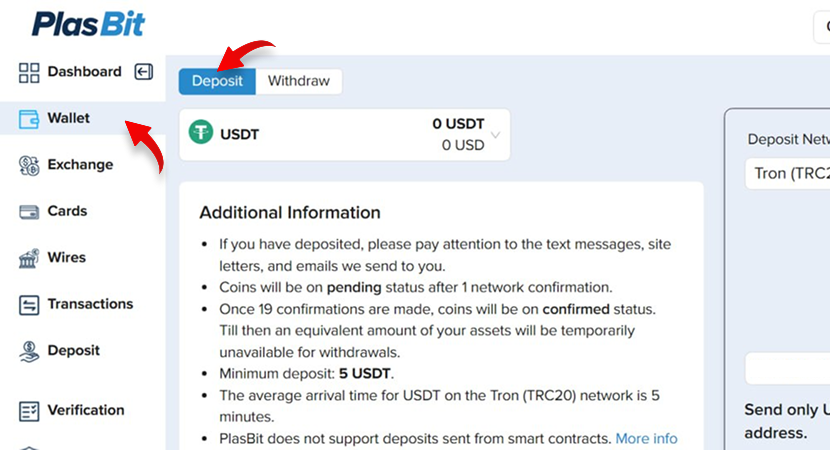
Step 1: Log in to your PlasBit dashboard, go to the Wallet section in the menu on your left-hand side, and click Deposit to add your preferred crypto.
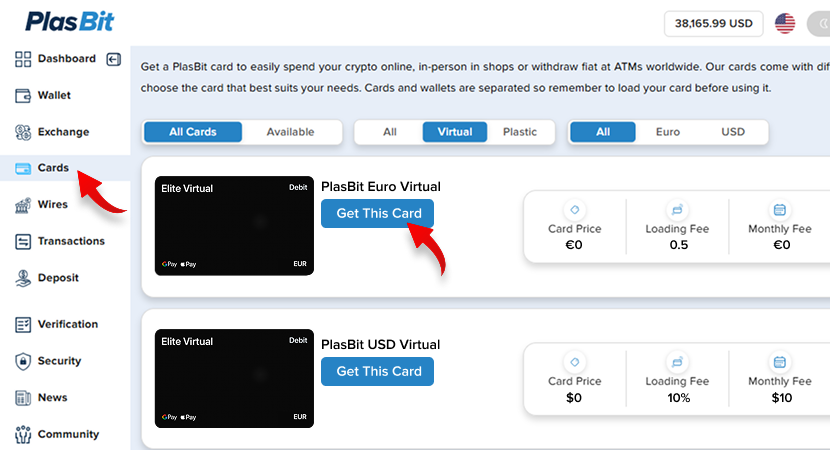
Step 2: Go to the Cards section, select the PlasBit Euro Virtual card, and click the Get This Card button.
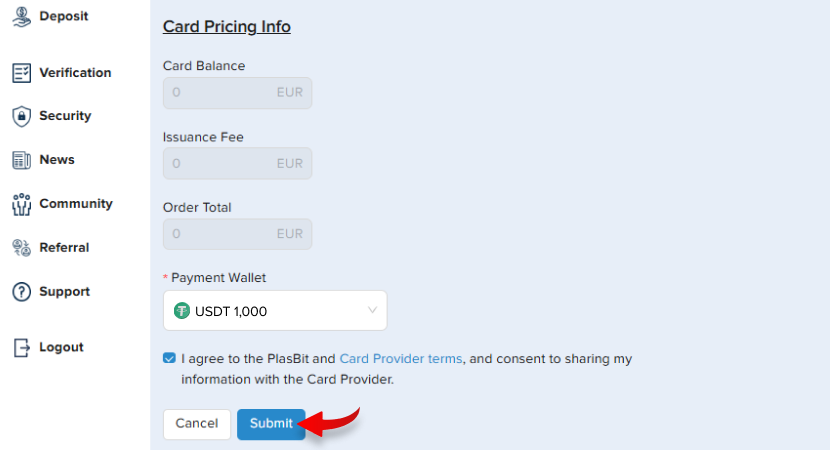
Step 3: Confirm your order and wait for your card order confirmation.
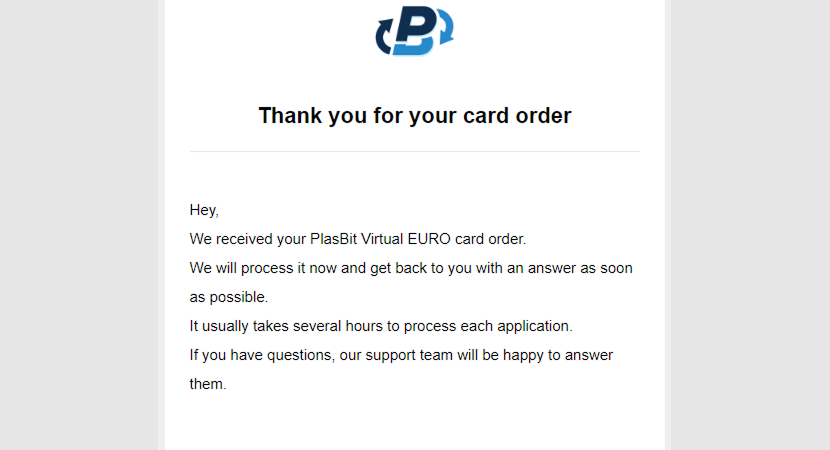
Step 4: As soon as your card is issued, which takes only a few minutes, you will receive a notification via email.
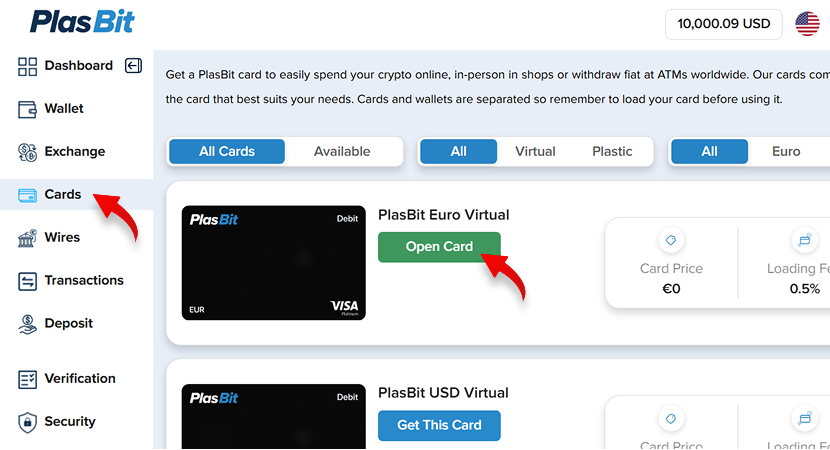
Step 5: Now that you have your card, go back to the Cards section and click Open Card on your PlasBit Card.
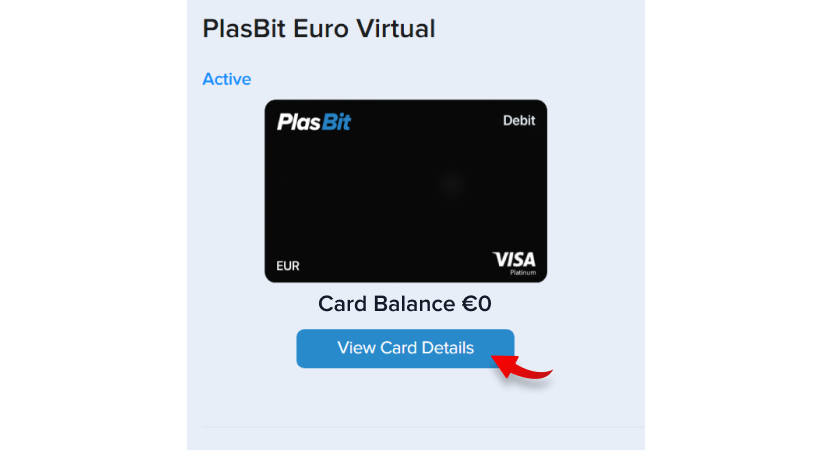
Step 6: To view your card details, press the View Card Details button and you’ll receive a code via email. Enter that code to see your card number, expiry date, and CVV.
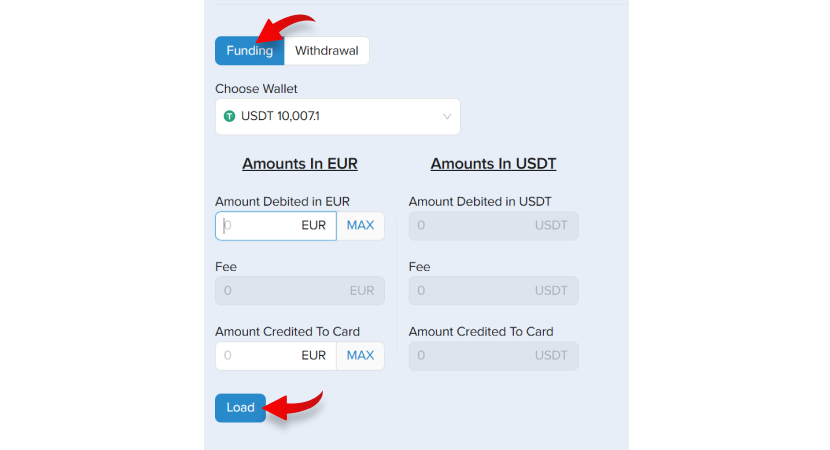
Step 7: To use the card, you first need to load balance onto it. Go to the Funding tab and choose the wallet you wish to charge, in this case, USDT. Next, enter the amount you want to add to it and press Load.
That's it, your card is all set, and you can start using it both online and in stores, wherever a traditional debit card is accepted.
KYC Is a Must for Crypto Cards
Banks don’t make up rules on their own, but follow what financial regulators tell them to do. Probably the most common rule both the banks and you as their client will have to comply with is Know Your Customer (KYC), which verifies your identity and address. Also, crypto exchanges must obey all the same regulations as the banks because they function similarly. This includes PlasBit. To verify identity via KYC, PlasBit needs the client's passport, national ID card, or driver's license, where accepted. For BiH specifically, PlasBit accepts Bosnian passports and IDs, but not driver's licenses for identity verification. As for the address, the person will need to submit a gas, electricity, or phone bill from the past three months.
PlasBit doesn't deliver cards to clients with a Bosnian address, but Bosnians living in one of the eligible countries can still get a card by completing verification using their Bosnian documents and their foreign residential address. Crypto companies must perform KYC on each and every user and also pass the verified client's information to payment processors such as Visa or Mastercard. If companies detect unusual activity, they'll likely do additional verification. And there's a good reason for all this. KYC is designed to protect the financial system, the businesses, and the clients by thoroughly screening each person before giving them access to card services. Companies that fail to comply risk seeing the funds frozen, getting licenses suspended, and losing their card programs altogether.
Comparing Crypto Cards Available to Bosnians
Bosnians can use five crypto cards, and each comes with different advantages and costs. Some providers offer higher withdrawal limits, others support many more cryptocurrencies compared to the competitors, and some charge loading fees, which is a fee that users pay when putting money on their cards.
That said, even seemingly small fees can pile up over time, reaching hundreds of euros in a matter of just a few years. So, while you know the answer to can I get a crypto card in Bosnia, you should also take your time to do some research and compare all the available options before making a choice.

All five crypto cards available to Bosnians require KYC verification and support stablecoins such as USDT. PlasBit also offers both EUR and USD-denominated cards and supports both Apple and Google Pay, which is important as the majority of people in Bosnia and Herzegovina are Android users.
Wondering Are Crypto Cards Legal in Bosnia? The Current Legal Situation
BiH doesn’t currently have comprehensive cryptocurrency legislation, which causes huge issues for users and banks alike, and the uncertainty this creates has users asking themselves are crypto cards legal in Bosnia? Yes, crypto cards are legal in Bosnia because there are no laws regarding cryptocurrencies and there are no regulations banning them. However, Bosnian bank clients using crypto often have no clear legal protections, which means that, if banks see any crypto activity and deem it risky, they can freeze the funds or close the account, and there’s nothing the client can do about it.
This is not theoretical, it has happened before, as the biggest crypto lawsuit in Europe exemplifies. It happened in 2019 and involved a major bank and a Bosnian company that aimed to do crypto-related wire transfers. Bitminer Factory opened an account with UniCredit Bank and obtained approval from it to conduct crypto wire transfers, but when it received a transfer of €87,582.30, the Italian bank closed the account without warning, effectively killing the company’s smart contract.
Bitminer Factory sued the bank for €131 million, and while initially ruling in favor of the crypto firm in early 2022, the court sided with the bank after its appeal in early 2023, accepting its arguments that crypto activity represented reputational risks, as well as that it had the right to close accounts under its internal rules as it deemed fit. This again proves that crypto users are not protected in the country, and their funds are not safe. The banks won’t work with crypto, and courts are currently useless, at least without a clear crypto framework that users can lean on.
Here’s another major obstacle for Bosnian crypto users: not only does the country not have a national law to regulate crypto, but it’s also divided into two highly autonomous governing entities and a self-governing administrative unit, Brčko. The BiH entity Republika Srpska amended its Securities Market Law in 2022, introducing some protections for crypto users. The Federation of Bosnia and Herzegovina doesn’t have a crypto law, and neither does the Brčko District. What all this tells us is that, while not illegal, using crypto in Bosnia and Herzegovina via the local banks is tricky and risky, but crypto cards provide a simple alternative that allows users to bypass all these issues, and we already know the answer to can I get a crypto card in Bosnia is a clear yes.
Can I Withdraw Cash in Bosnia With a Crypto Card?
Crypto cards function the same as traditional bank cards and you can simply go to any ATM to withdraw cash. So If you ask yourself can I withdraw cash in Bosnia with a crypto card? Yes, use your plastic crypto card on any ATM like you would any other banking card. The daily withdrawal limit is €/$500 with PlasBit's card.
People without crypto cards have other ways to exchange crypto for cash in BiH. Often, they’ll find a buyer through classifieds platforms such as Pik/OLX.ba, agree on the price, and meet to complete the exchange. However, meeting buyers carries a huge risk of scams and should be avoided.
Another way is the word-of-mouth or the friend-of-a-fiend system, where somebody you know will recommend a person willing to buy your crypto. While this method may seem safer because you know at least one of the people in this chain, there are still plenty of unknowns, making the transaction very risky. Either way, if you are meeting somebody, make sure it’s in a public place.
All this said, using a crypto card removes the need to arrange transactions with strangers altogether and allows you to withdraw cash from an ATM whenever needed. When it comes to crypto ATMs specifically, there are five in the country, two of which are in its capital Sarajevo. Looking at each entity as mentioned above, four ATMs are in the Federation of Bosnia and Herzegovina, one in Brčko District, and none in Republika Srpska.
Can I Buy Groceries With a Crypto Card in Bosnia?
For everyday purchases, crypto cards work much like ordinary payment cards. The only difference is that it’s loaded with crypto, but the seller doesn’t care because they get paid in fiat in the very same way they do with any other card. If you’re wondering can I buy groceries with a crypto card in Bosnia, yes, you can by using your crypto card like a regular bank card in any supermarket or a grocery store that accepts debit cards. Either you swipe your plastic crypto card on the terminal or connect your card to your phone wallet such as Apple or Google Pay and tap it.
This allows users to spend crypto-derived balances for routine expenses without converting funds through local banks. PlasBit does this for you, simplifying the entire process. As soon as you load your crypto, it’s converted into fiat, so there are no additional steps you need to worry about.
Can I Get a Crypto Card in BIH?
Bosnian citizens living in the country and those living abroad often wonder whether they qualify for crypto cards. The situation is slightly different for the two groups, specifically when it comes to plastic cards. To answer the question can I get a crypto card in BiH, yes, you can get a virtual prepaid crypto card as a BiH citizen by opening an account, completing KYC verification, and ordering it on your dashboard, and the card is most often issued in a couple of minutes. We currently do not ship plastic cards to Bosnia, but if you're a BiH citizen living in a different supported country, you can still order one.
This means Bosnians residing abroad can continue using crypto cards and keep all the necessary financial connections with family members in the home country. Importantly, as noted above, they are able to send a plastic card to a family member back home and top it up online whenever they’d like to.
Conclusion
Instead of keeping all their savings in a Bosnian bank account, Bosnians can hold funds inside crypto wallets, use this wallet as their bank account, and pay with digital coins as with fiat. By adding a crypto card to this setup, you’re bypassing the local banking system entirely, becoming your own bank and managing your assets directly. With a crypto card, those funds in your crypto wallet become spendable for daily purchases, online payments, and ATM withdrawals, because the crypto card works just like a debit card.